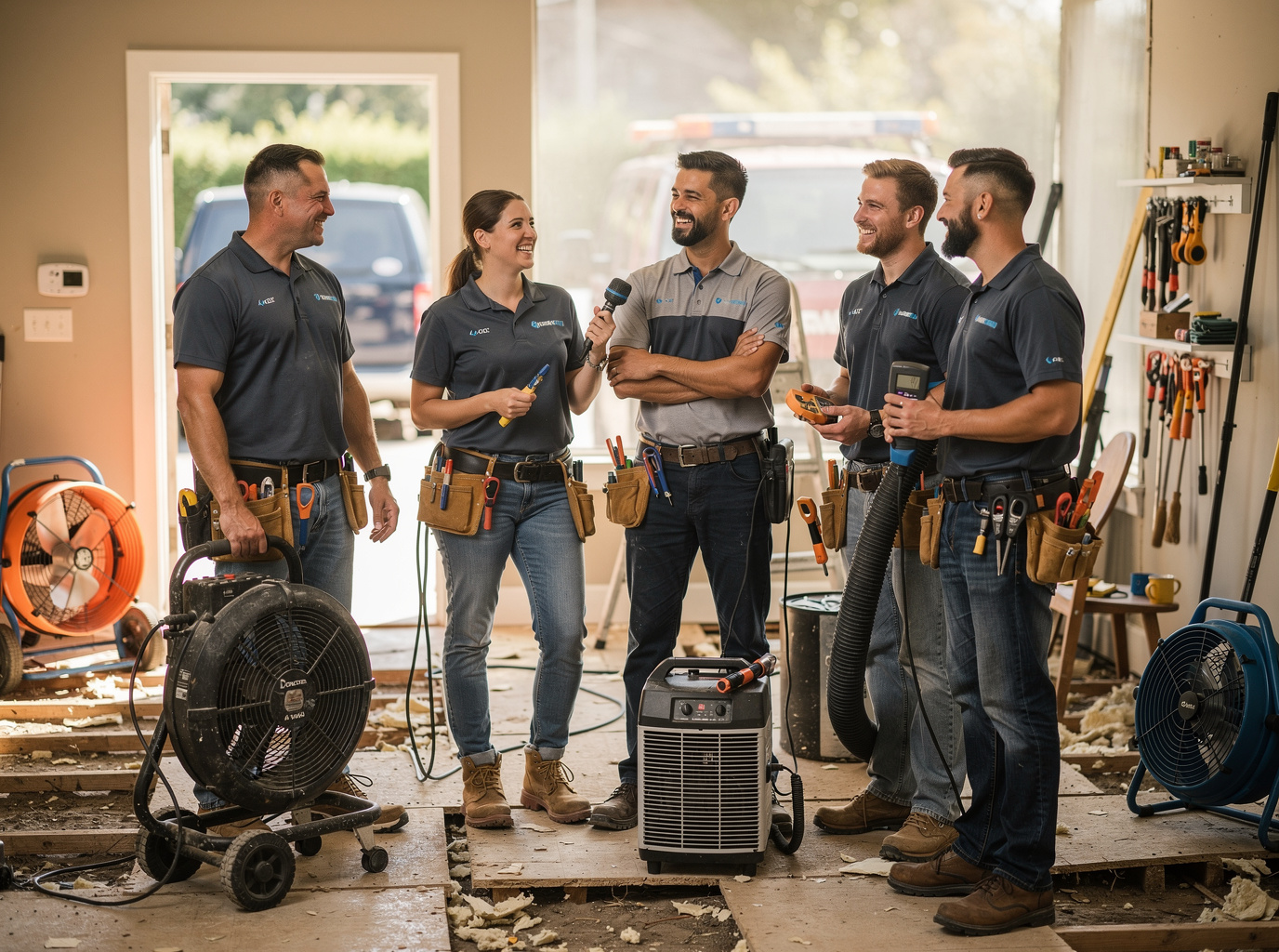
Cold Spring sits on rolling hills just across the river from Cincinnati, where summer humidity and sudden downpours regularly send water into basements and crawl spaces. Homes here, many built between the 1950s and 1980s along streets like Alexandria Pike, sit on sloped lots that channel runoff straight toward foundations. Our crews based at 1435 Vine St respond quickly to these calls, bringing equipment up the steeper driveways that standard vans sometimes struggle to reach.
When pipes burst or heavy rain overwhelms gutters, water damage repair in Cold Spring often means pulling carpet from finished lower levels and drying behind drywall that runs right to grade. The same humid air that makes summers uncomfortable also slows drying times, so we set up extra dehumidifiers and monitor moisture readings room by room. We work around the I-275 corridor traffic patterns so equipment trucks do not block resident access during weekday jobs.
Nearby neighborhoods like Newport and Norwood share similar older housing stock, but Cold Spring lots tend to be narrower with shared drainage swales that can back up during prolonged wet spells. That layout changes how we place extraction hoses and where we look first for hidden moisture pockets behind finished walls.
Around Cold Spring
We regularly work near:
- 📍Alexandria Pike
- 📍I-275 interchange
- 📍Cold Spring Branch Library
- 📍US 27
- 📍Cold Spring Cemetery
Water Damage Restoration in Cold Spring — Local Notes
- •Steep driveways and narrow lots off Alexandria Pike require smaller drying equipment and careful hose routing to avoid blocking neighbors.
- •Many 1960s-1970s split-level homes have finished basements at or below street grade, so storm water quickly reaches living areas.
- •Shared drainage swales between properties can overflow after hot summer rains, pushing water under slabs rather than through obvious entry points.
- •High humidity lingers after storms, extending drying times in tightly built homes with limited airflow in lower levels.