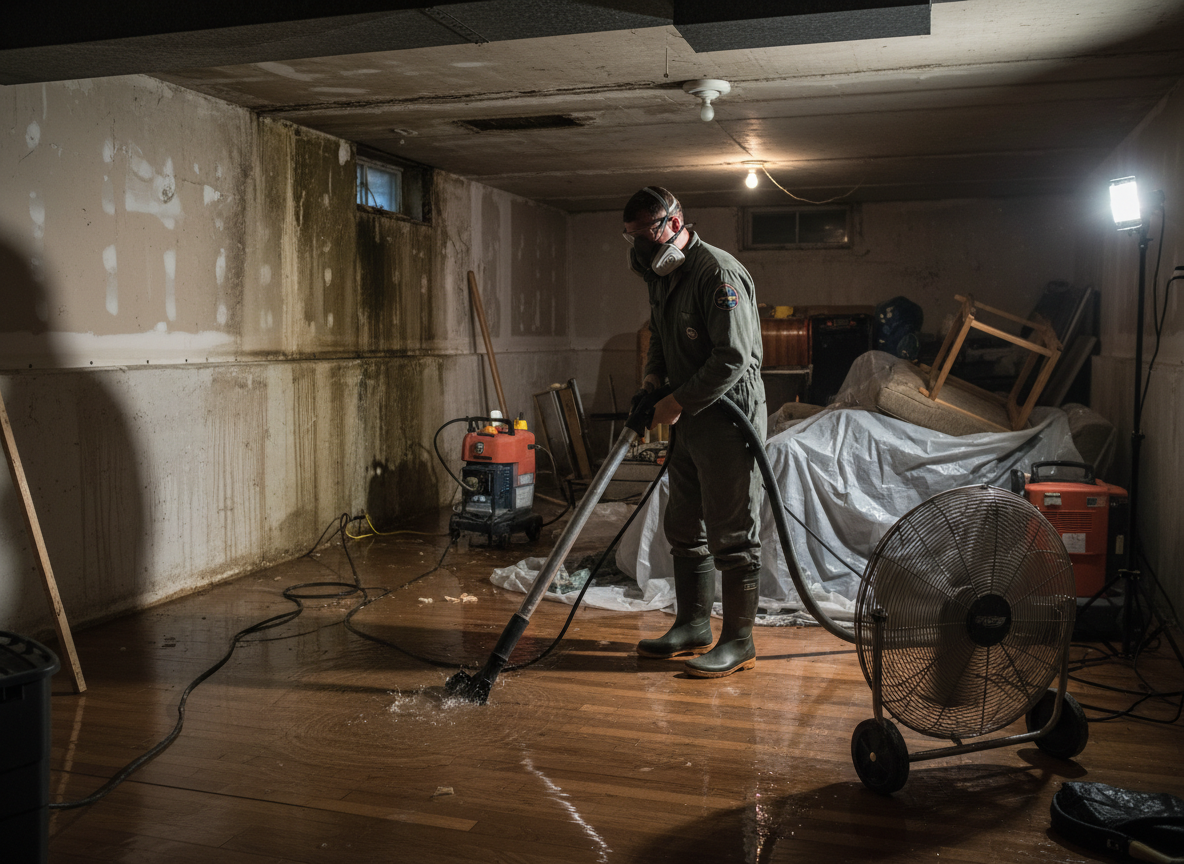
Cincinnati’s older housing stock in Over-the-Rhine and Mount Adams often features brick foundations and knob-and-tube wiring that complicate drying after a leak. Hot, humid summers speed mold growth inside wall cavities once moisture sits for more than 48 hours, so crews must pull baseboards and use moisture meters on lath-and-plaster walls rather than relying on surface fans alone. Properties near the Great American Ball Park and along the Ohio River also see occasional backup from combined sewers during heavy rain, requiring subfloor inspection before any flooring is replaced.
In Hyde Park and Norwood, 1920s–1940s homes with finished basements frequently hide water behind paneling or under carpet pads. Technicians cut small inspection holes at the lowest point of each wall and run air movers pointed at joist bays for several days. Newport homes across the river share the same clay-heavy soil that holds water against foundations, so exterior grading checks are part of every repair to prevent repeat saturation.
Repair work follows Hamilton County building practices that require GFCI protection in any wet area after electrical components are replaced. Crews document hidden damage with photos for insurance adjusters and leave the structure open until readings drop below 15 percent moisture content on both wood and drywall.
Technician insight
In Cincinnati the thing that catches most people out with water damage repair is how quickly humidity in the summer turns a small ceiling leak into mold behind plaster in Over-the-Rhine row houses. Homeowners often stop at the visible stain and miss the water that travels along lath into the next room, so we always pull baseboards on both sides of the wall.
Hyde Park basement after washing machine leak
Water from a failed supply line spread under laminate and into the joist bays of a 1930s Hyde Park home. We mapped moisture two rooms away, opened the lowest sections of drywall, and ran drying equipment for four days until readings stabilized. New subfloor and baseboards were installed and the homeowner avoided mold growth during the humid stretch that followed.
Water Damage Repair Services We Offer
✓Basement Water Extraction
Removes standing water from Cincinnati basements after storms or sump failures, then dries joists and sill plates common in Over-the-Rhine brick homes.
✓Ceiling and Drywall Repair
Cuts out water-stained plaster or drywall in Mount Adams and Hyde Park homes, treats for hidden mold, and matches original textures before repainting.
✓Hardwood Floor Restoration
Dries and refinishes cupping hardwood floors in Downtown Cincinnati and Norwood properties before warping sets in during humid summer months.
✓Appliance Leak Repair
Locates and fixes supply-line or drain leaks from washers and water heaters that affect finished basements near Findlay Market and the Cincinnati Zoo.
✓Sewer Backup Cleanup
Extracts contaminated water from combined sewer backups common in older Hamilton County neighborhoods and disinfects affected surfaces.
Water Damage Repair Cost in Cincinnati, OH
| Service | Typical Range | What Affects It |
|---|---|---|
| Initial water extraction visit | $350–$750 | Size of affected area and whether sewage is present |
| Three-day drying package | $800–$1,600 | Number of rooms and wall cavities opened |
| Drywall and trim replacement | $1.50–$3.50 per sq ft | Material grade and access difficulty in older homes |
| Hardwood floor drying and refinishing | $4–$8 per sq ft | Extent of cupping and finish type |
Ranges are typical for Cincinnati, OH and confirmed with an exact written quote before any work starts.
How it works
- 1
Arrival And Containment
Technicians arrive at the Cincinnati address, set up containment barriers, and stop the water source before moving through the property.
- 2
Moisture Mapping
Infrared cameras and meters locate hidden water in walls and floors typical of 19th-century Over-the-Rhine and Hyde Park construction.
- 3
Water Removal And Drying
Pumps and air movers extract and evaporate moisture while monitoring daily readings until levels return to normal for the neighborhood’s climate.
- 4
Repair And Restoration
Replace damaged drywall, flooring, or trim with materials that match the home’s age and style, then verify the structure is dry before closing walls.
Pricing
Upfront written quotes after inspection; final cost depends on hidden damage found during drying.