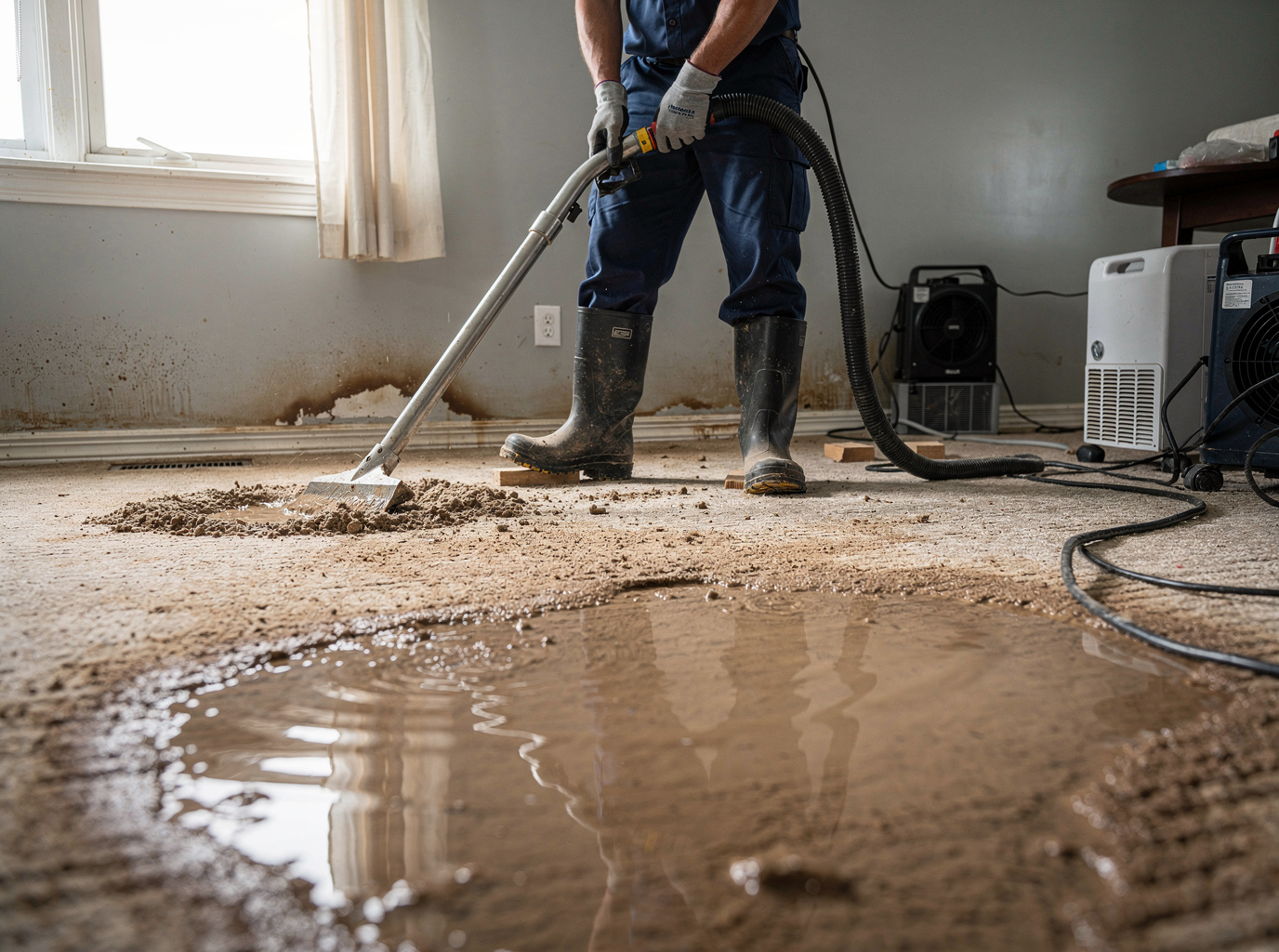
Cincinnati's humid subtropical summers drive rapid mold growth after any water event, especially in the pre-1920 brick row homes common across Over-the-Rhine and Mount Adams. Older plaster and lathe walls absorb moisture deep into cavities, and standard fans alone will not pull it out before secondary damage begins. Technicians must open walls, use moisture meters on multiple layers, and run commercial dehumidifiers sized for the square footage and humidity load typical in Hamilton County.
Basements in Hyde Park and Norwood often sit on clay soils that hold water after heavy rains, pushing seepage through foundation cracks and around sump pits. When river levels rise near the Great American Ball Park or Findlay Market area, groundwater can back up into floor drains and affect multiple units in the same block. Cleanup crews isolate affected zones, extract standing water with truck-mounted units, and place air movers to create negative pressure so spores do not migrate to unaffected rooms.
Newport homes just across the river share the same older plumbing and flat-roof construction found in Downtown Cincinnati, leading to hidden leaks behind kitchen walls or under bathroom subfloors. These jobs require removing baseboards, checking under cabinets, and drying for several days before any reconstruction. Skipping hidden moisture checks almost always results in recurring musty odors once the humid season returns.
Technician insight
In Cincinnati, the thing that catches most people out with Water Damage Cleanup is how fast mold blooms inside the thick plaster walls of Over-the-Rhine row homes once summer humidity hits 70 percent-plus; homeowners often stop drying too soon and the odor returns weeks later.
Hyde Park Basement Seepage
Heavy rain pushed groundwater through a foundation crack in a 1920s Hyde Park home. Water reached the finished lower level and wicked into carpet and drywall. Crews extracted standing water, opened baseboards, and ran drying equipment for four days until readings matched the rest of the house.
Water Damage Cleanup Services We Offer
✓Standing Water Extraction
Removes pooled water from basements and lower levels using truck-mounted pumps sized for Cincinnati row-home footprints.
✓Structural Drying
Deploys commercial dehumidifiers and air movers to dry plaster, joists, and subfloors in older Hamilton County homes.
✓Carpet and Pad Removal
Extracts saturated carpet and padding, then treats subfloors to prevent mold in humid summer conditions.
✓Wall Cavity Drying
Opens baseboards and uses directed airflow to dry lathe and plaster walls common in Over-the-Rhine and Mount Adams properties.
✓Sump Pit and Drain Backup Cleanup
Clears and sanitizes pits after groundwater or sewer backup events typical during heavy rains in Hyde Park and Norwood.
Water Damage Cleanup Cost in Cincinnati, OH
| Service | Typical Range | What Affects It |
|---|---|---|
| Initial Assessment And Extraction | $350–$750 | Higher when multiple levels or finished basements are involved |
| Drying Equipment Per Day | $150–$300 | Varies with square footage and summer humidity levels |
| Wall Cavity Drying Add-On | $200–$450 | Required for plaster walls in pre-1920 homes |
| Carpet And Pad Removal | $100–$250 | Per average room size |
Ranges are typical for Cincinnati, OH and confirmed with an exact written quote before any work starts.
How it works
- 1
On-Site Assessment
Technicians inspect all affected rooms, measure moisture in walls and floors, and identify hidden water paths common in Cincinnati's older housing stock.
- 2
Water Removal
Standing water is extracted with pumps and wands, then wet materials are removed to stop further absorption into brick and plaster.
- 3
Drying And Monitoring
Equipment is placed and daily moisture readings are taken until levels match unaffected areas in the home.
- 4
Final Sanitation
Antimicrobial treatment is applied to dried surfaces before any reconstruction work begins.
Pricing
Costs depend on the volume of water, number of affected rooms, and whether hidden cavities in older walls require opening.