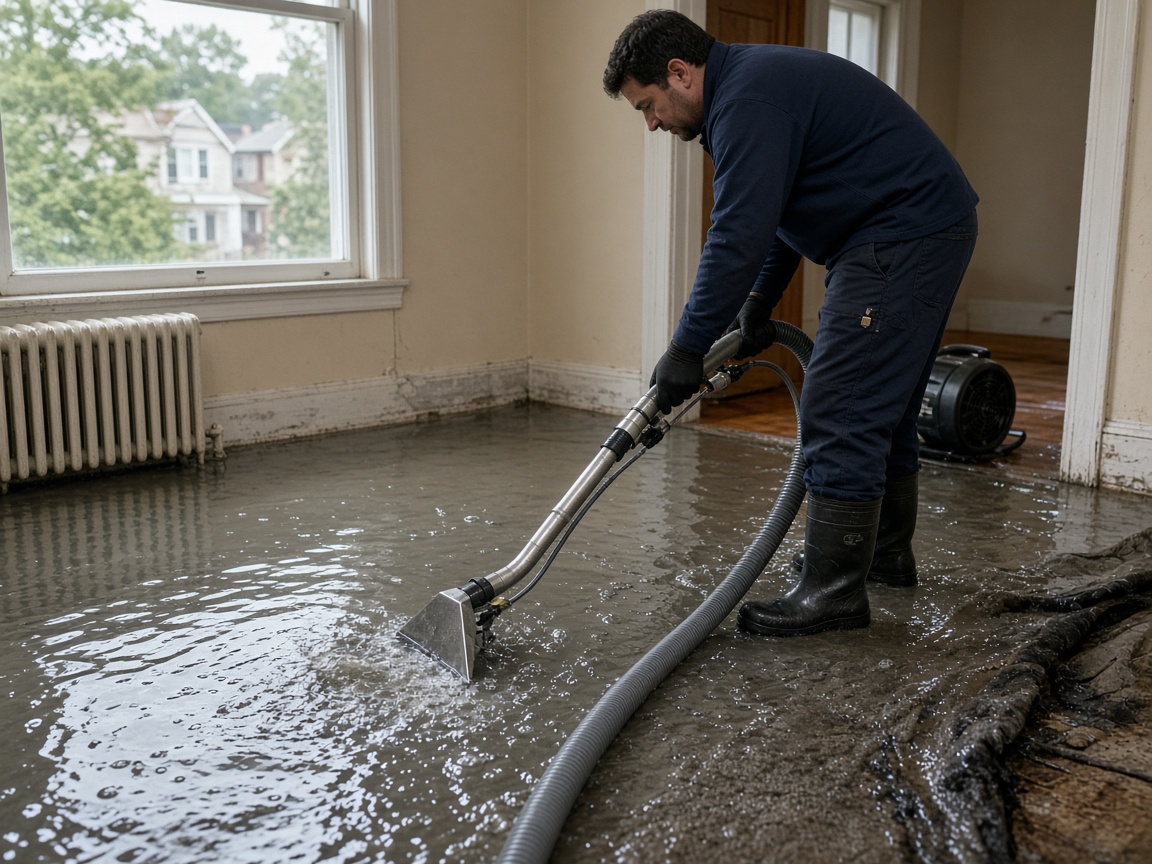
Cincinnati's humid subtropical summers accelerate moisture problems in the city's older brick and frame homes, especially those built before 1950 in Over-the-Rhine and Mount Adams. When water enters through foundation cracks or roof leaks common on the area's hilly terrain, it quickly saturates plaster walls and hardwood floors. Delaying extraction allows humidity to drive secondary mold growth within 48 hours, particularly in tightly sealed historic structures where airflow is limited.
Technicians use truck-mounted extraction units and moisture meters to pull standing water from basements and crawl spaces before it migrates to neighboring units in multi-family buildings near Findlay Market or the Great American Ball Park. In Hyde Park and Norwood, clay-heavy soils slow natural drainage, so crews often install temporary barriers to prevent runoff from re-entering after heavy rains. Proper removal also requires checking for hidden pockets behind cabinets and under subfloors that older construction methods frequently conceal.
Local codes in Hamilton County require documentation of moisture levels before any reconstruction begins, and crews coordinate with property owners to protect original woodwork and tile in landmark districts. Hot summer temperatures increase evaporation rates but also raise indoor humidity, so dehumidifiers must run longer than in drier climates to reach safe readings below 50 percent. Skipping these steps leads to repeated callbacks when residual moisture reappears after the first heat wave.
Technician insight
In Cincinnati, the thing that catches most people out with Emergency Water Removal is how quickly humidity from our hot summers re-soaks plaster and lathe in 1800s brick homes around Over-the-Rhine and Mount Adams once the visible water is gone.
Hyde Park Basement After Heavy Rain
Water entered a 1920s brick home through a cracked foundation wall during a summer storm. Extraction crews found standing water three inches deep across the basement and hidden saturation behind built-in cabinets. Pumps and air movers ran for four days while crews checked joists daily until readings dropped below 15 percent. The owner avoided mold growth that often appears in similar properties when drying is rushed.
Emergency Water Removal Services We Offer
✓Basement Flood Extraction
Removes standing water from Cincinnati basements after storms or pipe bursts before it damages electrical systems or spreads to first-floor living areas.
✓Carpet and Pad Water Removal
Extracts water from soaked carpets and padding in Hyde Park and Downtown homes to prevent mold under layers that trap moisture against subfloors.
✓Appliance Leak Extraction
Handles sudden water release from washing machines or water heaters common in older Over-the-Rhine row houses before it reaches adjacent units.
✓Crawl Space Water Removal
Clears pooled water beneath homes in Mount Adams and Newport where poor drainage allows moisture to linger and affect floor joists.
✓Storm Water Cleanup
Extracts rainwater that enters through windows or doors during summer storms affecting properties near the Cincinnati Zoo and Great American Ball Park.
Emergency Water Removal Cost in Cincinnati, OH
| Service | Typical Range | What Affects It |
|---|---|---|
| Initial assessment and extraction setup | Free | Includes first visit during business hours |
| Basement water extraction | $350–$850 | Varies with depth and debris load common after local storms |
| Carpet and pad removal per room | $200–$450 | Higher in multi-story homes with limited access |
| Crawl space drying package | $400–$700 | Includes equipment placement and monitoring |
Ranges are typical for Cincinnati, OH and confirmed with an exact written quote before any work starts.
How it works
- 1
On-Site Assessment
Technicians arrive at the Cincinnati address, locate the water source, and map affected materials using moisture meters while noting construction details typical of the neighborhood.
- 2
Water Extraction
Truck-mounted pumps and portable extractors remove standing water from floors, carpets, and walls to reduce saturation before humidity in the humid subtropical climate drives further spread.
- 3
Drying And Monitoring
Air movers and dehumidifiers are positioned based on home layout, with daily readings taken until moisture levels meet Hamilton County standards for safe reconstruction.
- 4
Final Documentation
Photos and moisture logs are provided to the owner for insurance and any required local permitting before work concludes.
Pricing
Costs depend on water volume, number of affected rooms, and access challenges in older buildings. Upfront quotes are provided after assessment.