2026-11-12 · Tom Becker
How Cincinnati Winters Cause Pipe Bursts in Older Homes
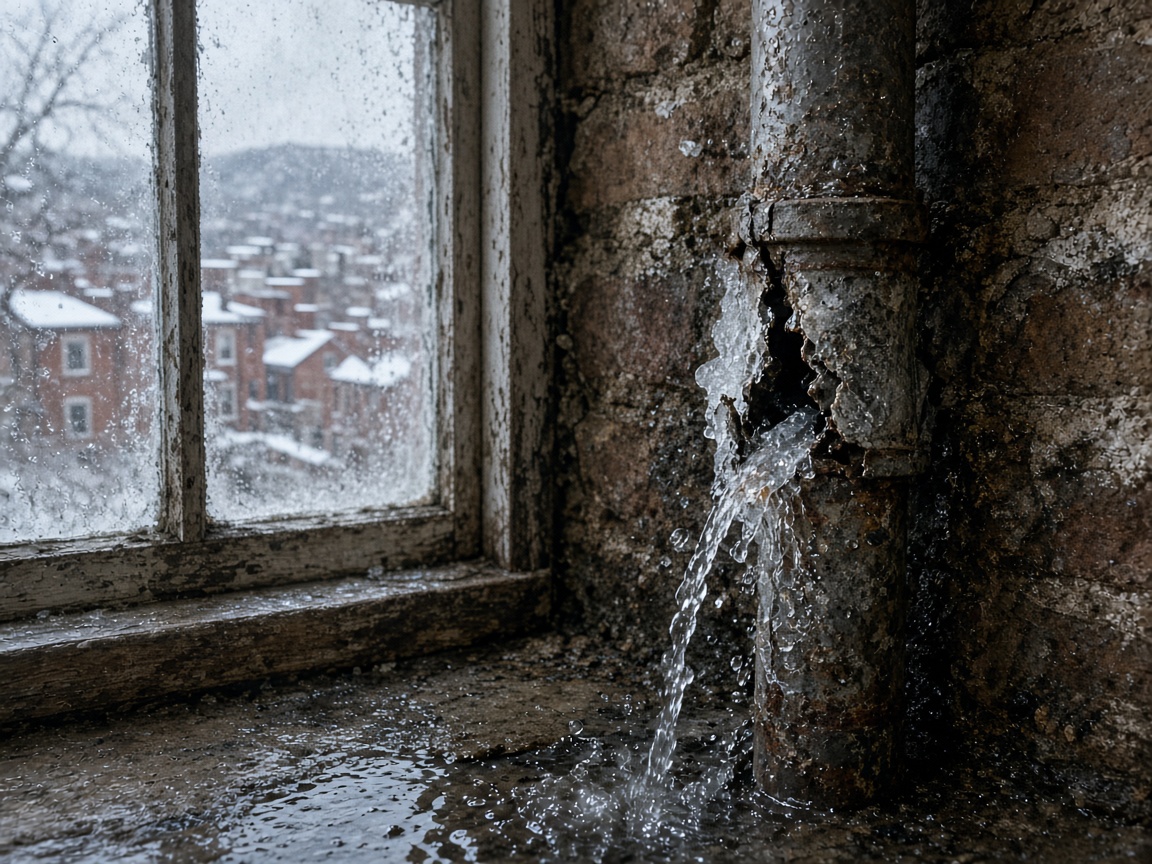
Cincinnati winters cause pipe bursts in older homes when overnight lows fall below 20°F and water inside uninsulated pipes freezes and expands by roughly 9 percent, splitting copper or galvanized lines that were installed before 1950. Homes in Over-the-Rhine and Downtown Cincinnati often retain these original pipes because many structures predate modern insulation standards and sit on narrow lots with limited access for retrofits. The same pattern appears in Hyde Park and Mount Adams where hilly terrain exposes more exterior walls to wind chill. Once daytime highs reach the mid-30s the ice melts and pressurized water escapes through the new cracks.
How Freezing Cycles Affect Pre-1950 Plumbing in Hamilton County
Older homes in Hamilton County typically contain galvanized steel or early copper supply lines that sit inside exterior walls or crawl spaces without foam sleeves. When temperatures stay below freezing for more than six consecutive hours the standing water in those lines turns to ice and exerts outward pressure that exceeds the pipe's burst rating. Neighborhoods such as Norwood and Newport show repeated failures along north-facing walls because those surfaces receive the least solar warming during short winter days. After several freeze-thaw cycles the metal fatigues and small fractures open, especially at elbows and joints where the pipe was bent during installation.
Why Older Cincinnati Homes Lose Heat Faster Than Newer Builds
Homes built before 1950 in Over-the-Rhine and Mount Adams often have single-pane windows, uninsulated brick walls, and attics with minimal or settled insulation. These features allow interior temperatures to drop quickly once the furnace cycles off, chilling the pipes that run along exterior walls. The humid subtropical summers mentioned in local records do not offset the winter heat loss because the same homes lack vapor barriers that would keep wall cavities drier. When cold air infiltrates through gaps around Findlay Market area row houses the pipes cool faster than the surrounding air, creating ideal conditions for ice formation inside the lines.
Thaw Patterns and Resulting Water Flow in Cincinnati Neighborhoods
Once temperatures climb above 32°F the ice inside the pipes melts from the outside in, sending a sudden rush of water through any new openings. In Hyde Park and the area near Great American Ball Park this often shows up first as damp drywall on second floors where supply lines feed upstairs bathrooms. Residents near the Cincinnati Zoo report similar leaks after multi-day cold snaps because the zoo's large open grounds allow wind to strip heat from nearby residential blocks. The water then travels along floor joists and appears in ceilings or basements days later, turning a small pipe failure into widespread moisture damage.
Local factors such as the steep slopes in Mount Adams also direct meltwater toward foundations, increasing the chance that escaped water from a burst pipe will saturate soil and enter basements. Homeowners who notice reduced water pressure after a cold snap or hear hissing behind walls should shut off the main valve at the street and call for assessment before attempting any repairs themselves.
For readers dealing with active leaks after a freeze, the service page on water damage repair outlines the drying steps used on Hamilton County jobs. Additional context on how local weather affects moisture removal appears in the article Local Factors That Affect Drying Time After Water Damage in Cincinnati.