2026-11-12 · Tom Becker
Local Factors That Affect Drying Time After Water Damage in Cincinnati
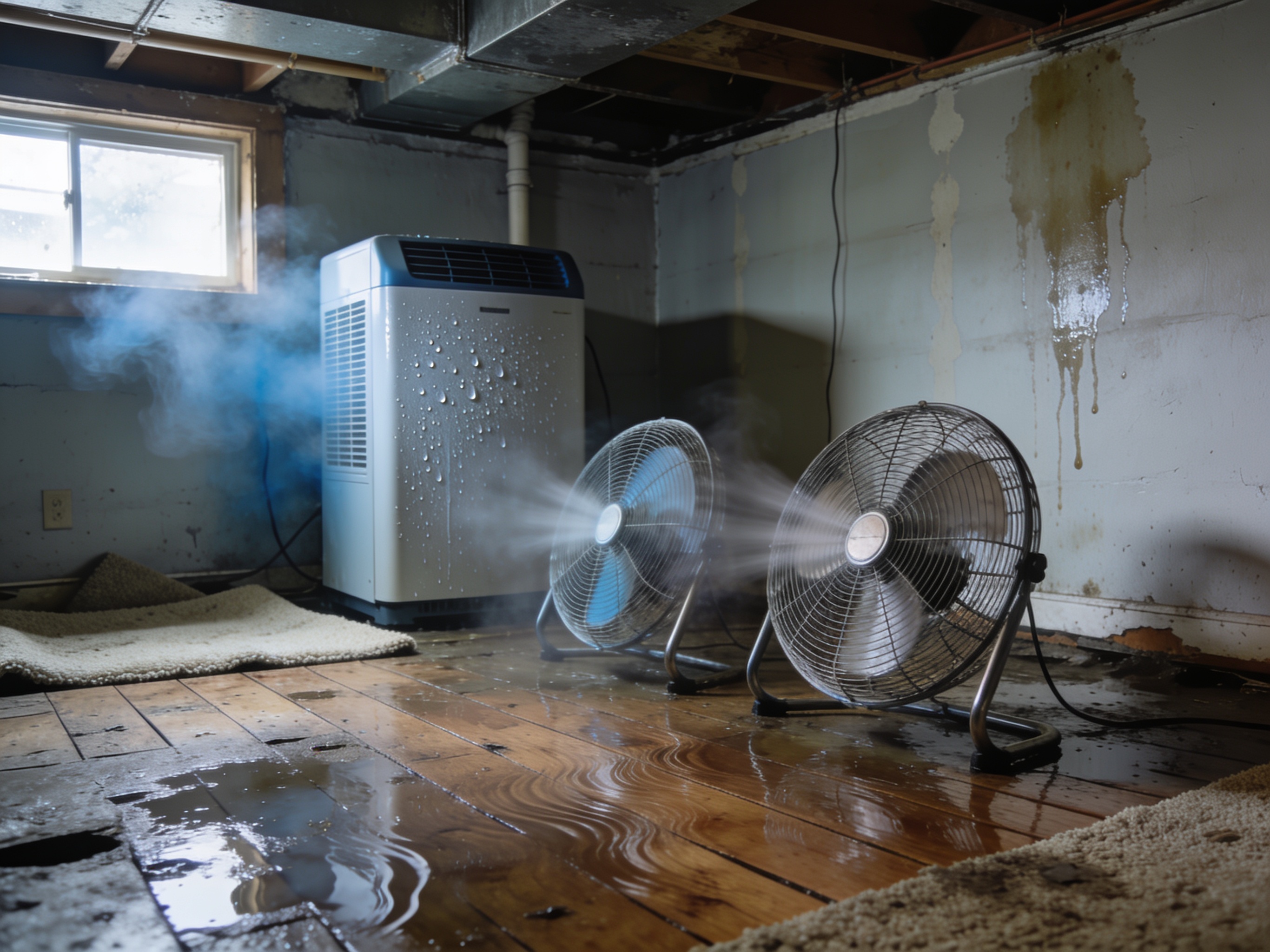
In Cincinnati, drying time after water damage typically ranges from 3 to 7 days when dehumidifiers and air movers run continuously, though high summer humidity in Hamilton County often stretches the process to 10 days or longer. The area's humid subtropical climate keeps moisture levels elevated from late spring through early fall, slowing evaporation from porous materials common in local homes.
Humidity Levels in Hot Cincinnati Summers
Cincinnati's humid subtropical climate produces average summer relative humidity readings above 70 percent, which slows moisture release from drywall, plaster, and hardwood floors. In neighborhoods such as Hyde Park and Mount Adams, older homes with thick plaster walls retain water longer because the dense material resists airflow. Technicians often place multiple dehumidifiers in these structures and monitor moisture meters daily because ambient humidity prevents standard drying rates. Hot afternoons around the Cincinnati Zoo area can push indoor temperatures above 85 degrees, requiring adjusted equipment settings to avoid condensation on cooler surfaces. Property owners in nearby Norwood and Newport face the same challenge when storms push humid air into basements. Consistent extraction within the first 24 hours remains the single most effective step to shorten the overall timeline.
Older Housing Stock in Over-the-Rhine and Downtown
Many buildings in Over-the-Rhine and Downtown Cincinnati date to the late 1800s and early 1900s, featuring brick foundations and lath-and-plaster interiors that absorb and hold water differently than modern drywall. These materials require extended drying periods because moisture travels deep into mortar joints and behind trim. Crews working in these structures frequently remove baseboards early to allow airflow into wall cavities. In Mount Adams, hillside lots create uneven drainage that funnels rainwater toward foundations, increasing saturation depth. Technicians track hidden pockets with infrared cameras because surface readings alone miss trapped water in multi-story brick row homes. The same conditions appear in parts of Newport where similar age and construction patterns exist.
Basement Flooding After Heavy Rain Events
Hamilton County receives frequent heavy rain that overwhelms older combined sewer systems, sending water into basements across Hyde Park and nearby valleys. Once water enters through floor drains or foundation cracks, concrete slabs and dirt crawl spaces retain moisture for extended periods. What to Do After Heavy Rain Floods a Cincinnati Basement outlines immediate steps that reduce standing water volume before drying begins. In these cases, drying times lengthen because concrete releases moisture slowly even with industrial equipment. Homes near Findlay Market and Great American Ball Park often sit on clay-heavy soils that limit natural drainage, forcing restoration teams to run equipment longer. Winter pipe bursts, covered in How Cincinnati Winters Cause Pipe Bursts in Older Homes, create similar saturation patterns that demand the same careful monitoring.
Soil Conditions and Local Terrain Effects
Cincinnati's hilly terrain and clay-based soils around the Ohio River basin slow groundwater movement, keeping foundation walls damp longer after any water event. Properties in lower-lying sections of Over-the-Rhine experience prolonged drying because water pools against brick and stone. Restoration crews account for this by placing air movers at floor level and using moisture barriers on dirt floors. In contrast, higher elevations near Mount Adams allow better runoff but still face humidity challenges during summer months. Water Damage Restoration teams adjust drying protocols based on these site-specific conditions rather than applying uniform timelines. Monitoring continues until readings reach acceptable levels across all affected layers.
Equipment and Monitoring Practices That Shorten Timelines
Professionals in Cincinnati combine high-capacity dehumidifiers with directed airflow to overcome local humidity. Daily moisture meter checks at multiple depths prevent premature stopping that leads to hidden mold. In older homes, removing sections of wet insulation and allowing wall cavities to breathe cuts total drying time by several days. Crews document readings at the start and end of each shift to confirm progress. When water reaches subfloors in basements common throughout Hamilton County, additional drying mats and fans target those layers directly. These steps, applied consistently, keep projects within the shorter end of the 3-to-10-day range despite challenging local conditions.